01
Relevant feedstock
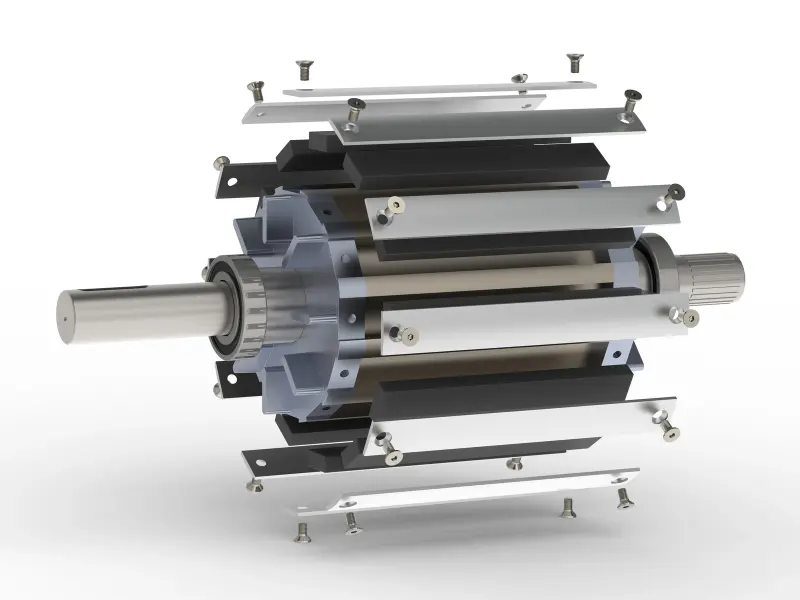
Production residues, tools, components, motors, generators and electronic assemblies. The relevant boundary is recurring homogeneous streams versus individual assets, complex composites and unknown mixed fractions. Typical source sectors include automotive, aerospace, wind energy, electronics, laboratories and semiconductor production. A useful description records physical form, condition, origin, visible markings, coatings, attachments and separation within the lot. Components, residues, powders, liquids and composite structures should not be presented as equivalent feedstock. Naming a form does not confirm acceptance or suitability for a particular recovery route.
02
Classification and sorting
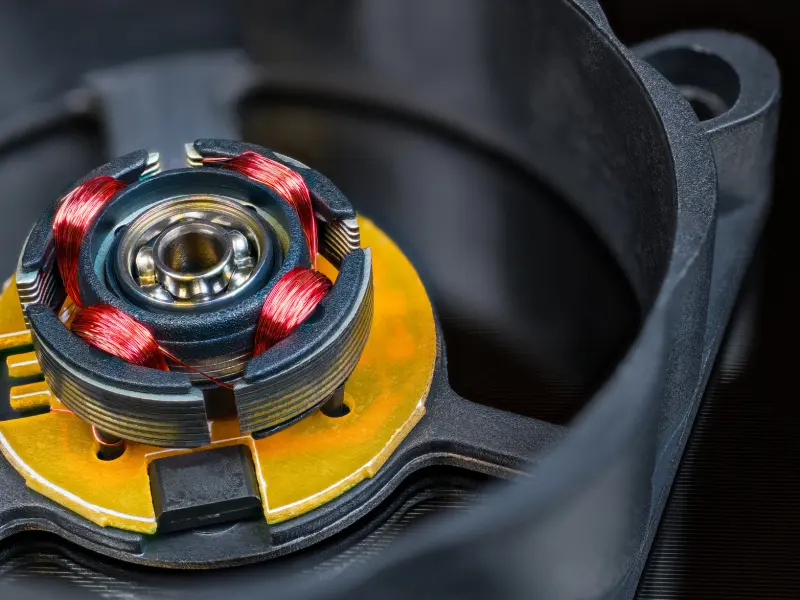
Classification records the material family, visible form, condition, origin and markings as separate facts. For this material stream, alloy, coating, carrier material or removable attachments may affect the next review step.
03
Process
Relevant technical steps may include map the source point, identify material, review dismantling needs, separate fractions and narrow a possible route. The method boundary is clear: industry of origin alone proves neither material composition nor suitability. Safe handling, interfering materials, waste classification and available records are reviewed before further classification. Markings or screening results do not provide representative evidence for a heterogeneous lot. Sampling, analysis, collection, treatment and a process route are not assumed; each requires separate agreement and a method suited to the specific material.
04
Logistics and transfer
Logistics for this specialist topic depend on material type, condition, packaging, potential hazards and waste classification. For sites in Industrial scrap and residue recycling, Electronics and component recycling, EV motor and magnet assembly recycling, Wind turbine generator recycling, the consignor, origin, proposed handover method and available supporting information should be clarified early.
05
Individual assessment
Assessment for this specialist topic is specific to the material actually offered.
06
Next steps
For a no-obligation enquiry, describe the lot as specifically as possible. Useful details include photographs, estimated scale, condition, origin, markings, country of storage and information about the generating process.
Send a no-obligation enquiry
Each lot is reviewed using the material information and evidence provided. Market and assessment factors may change; no blanket prices are stated.